
"Japanese era coffee Taiwan"
200 article(s) found

History of Coffee cultivation in Taiwan how to develop Coffee planting Technology in Taiwan
Professional coffee knowledge exchange more coffee bean information please follow the coffee workshop (Wechat official account cafe_style) A coffee tree bears fruit several times a year. Coffee is the second largest internationally traded commodity in the world, after oil. Coffee is a very important cash crop in many countries, but in Taiwan, you may have heard the name Gukeng Coffee. Trust you

The rise of Taiwan's ancient pit coffee
Yunlin County is a large county with traditional agriculture, and most of the county residents also make a living by farming. Rice, sugar cane, sweet potato, peanut and garlic have always been the main crops cultivated by farmers in turn. For generations, they have relied on it to feed their families and reproduce their children. No one thought coffee would become a strange flower in this land, attracting foreign tourists or young and fashionable consumers.

Alishan Tropical Dance Manor introduces what coffee producing areas are there in Taiwan?
Professional coffee knowledge exchange more coffee bean information please follow the coffee workshop (Wechat official account cafe_style) Taimali Township and Luye Township in Taitung can now see coffee trees. In the 1980s, home-grown coffee could be seen on the side of the Taijiu highway. Twenty years ago, Pan Yung-feng, director general of the Luye Rural Peasant Association, tried to grow coffee. At that time, the market of tea was good, and coffee was gradually replaced by tea gardens.

Coffee brewing champion Wang ze's way to win the championship. What's so special about Wang ze's cafe?
For more information on coffee beans, please follow the coffee workshop (Wechat official account cafe_style). If you talk about the history of coffee in Taiwan, you have to go back to the 10th year of Guang Xu in the Qing Dynasty (AD 1884), which was the first year of coffee cultivation in Taiwan. It was not planned for large-scale cultivation until the Japanese occupation era (1935). Drink as you drink

Magic beans Legend the rise of Taiwan's Gukeng Coffee
During Guang Xu's years, some British businessmen introduced coffee trees and local coffee, but it attracted a large number of young and fashionable consumers. Yunlin County is a big county of traditional agriculture, and the vast majority of the county people also make a living by farming. Rice, sugar cane, sweet potatoes, peanuts and garlic have always been the main crops planted by farmers in turn. For generations, they have relied on this to support their families and reproduce their children and grandchildren.

HIROIA-- coffee platform, audio and video cloud let you meet the coffee you want to drink
For the exchange of professional baristas, please follow the Coffee Workshop (Wechat official account cafe_style). Recently, many coffee-related platforms, APP, have been launched in Taiwan, and this platform, HIROIA, founded by Japanese Fujimi Hideo, hopes to integrate and share all Taiwan's coffee industry chain through the cloud platform. Coffee is not only coffee, but also coffee beans with shelf life.

Magic beans Legend the rise of Taiwan's Gukeng Coffee
During Guang Xu's years, some British businessmen introduced coffee trees and local coffee, but it attracted a large number of young and fashionable consumers. Yunlin County is a big county of traditional agriculture, and the vast majority of the county people also make a living by farming. Rice, sugar cane, sweet potatoes, peanuts and garlic have always been the main crops planted by farmers in turn. For generations, they have relied on this to support their families and reproduce their children and grandchildren.
Coffee Tour in China (3) Taiwan
The history of growing coffee in Taiwan has been 300 years since it was introduced when the Dutch occupied Taiwan (1626 AD, at the end of the Ming Dynasty), but it has not been popularized for various reasons.
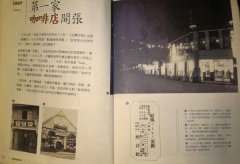
The earliest coffee shop in Taiwan: an introduction to the coffee shop culture in the old society
Xiyangxuan, a cafe at the west gate of Taipei in 1897, and the Lion Cafe in the Park in Taipei in 1912 appeared at the Witt Cafe in Taiping Town, Taipei in 1931. The earliest cafe in Taiwan was called Xiyang Xuan in September 1897. There was an advertisement for the opening of Xiyang Xuan, a restaurant that called itself a teahouse. It sold Western food and wine, but it was advertised.

Rolls-Royce in Coffee-introduction of production and Marketing characteristics and Origin Information of Coffee in Taiwan
Professional barista communication Please follow the coffee workshop (Wechat official account cafe_style) after drinking the first sip of Taiwan coffee, the tip of the tongue slowly changes from bitter to sweet when it is tasted slightly, the sweet, mellow and rich taste lingers in the mouth for a long time, and when the temperature drops slightly to 85 ℃, the unforgettable taste comes back to the heart again, perhaps with a hint of almond, maybe with some micronucleus.

Basic knowledge of fine coffee in coffee communication period chronology
Coffee spread to Arabia (eleventh century), Egypt, Syria. (13th century) Damascus (16th century) Europe (17th century) the first people to plan to grow and eat coffee were Arabs. At the beginning of the eleventh century, people in the Arab region boiled coffee into soup or dried it and then boiled it as stomach medicine. Because Muslim precepts are strict and alcohol is strictly forbidden, Muslims

Tainan must visit the Old House Cafe, each of the six famous shops is fascinating.
Professional baristas Please follow the Coffee Workshop (Wechat official account cafe_style) Tainan is the oldest city in Taiwan, dating back to the Japanese occupation era, and there are nearly 100-year-old houses everywhere, so the old house has gradually become one of the distinctive cultures of Tainan. In recent years, many operators have re-skinned their century-old houses, making use of antique red brick walls and natural green and yang.

The pure coffee market is minority and slow-growing-hanging-ear coffee is more suitable for the era of lazy people.
Under the trend of consumption upgrading, Ziyu has seized the tuyere of hanging-ear coffee, which has attracted the attention of coffee lovers and capital markets. The business model of Ziyu hanging ear Coffee is a bit like a combination of Starbucks, Blue Bottle and illy. The chain store 3W Cafe under the Ziyu existing line has an innovative model which is different from the traditional cafe. It is understood that Ziyu has become Tencent, Meizu,

To share with you the coffee culture around the world, the people who spread the coffee culture.
Coffee is no longer a new word. Coffee tastes different in different countries and places, but how much more do you know about coffee culture in different regions? When we travel, if you can know in advance about the local coffee culture, then it must be just a break during the trip, and you can really taste the local culture and customs.
Coffee introduced into China and Chinese Coffee Culture
There are several meanings to say that coffee was introduced into China: first, coffee was introduced into China and was initially consumed by European and American people who came to China; second, there were commercial cafes where ordinary people, Chinese and foreign people could drink and entertain themselves; and third, coffee was cultivated in the field in China, produced and sold for its own use.

Introduction of cafes with Taiwanese characteristics: if you don't soak in these cafes in Taiwan, you will go for nothing!
Coffee boutique life to travel to Taiwan, be sure to find a cafe for half a day, slowly feel Taiwan's unique cultural flavor and artistic temperament. The following six cafes, with old brands, newcomers, traditions and alternatives, have their own characteristics, which reflect the diversity of Taiwan in different ways, and are a cultural experience that can not be missed when traveling to Taiwan. Witch shop: heavy flavor, small and fresh

[Interview] Taiwan origin coffee monopoly Mori Takasa Cafe
Professional barista communication Please pay attention to coffee workshop (Weixin Official Accounts cafe_style) In recent years, with the gradual warming of fine coffee craze, coffee lovers pay more and more attention to the origin, terroir, processing method, roasting degree and variety source of coffee beans. However, for the vast majority of people, the coffee beans that are usually drunk in coffee shops come from

Distribution Map of Coffee planting areas in the World-Coffee planting Distribution Map of Yunnan
Map of Coffee growing areas in Yunnan the frost in 1975 destroyed most coffee crops in Brazil, but stimulated the development of coffee in Papua New Guinea. The Government has implemented a scheme to finance the creation of about 20 hectares of coffee plantations in rural or collective land ownership. This measure does increase the infiltration of coffee in the local economy.
Chinese people drink coffee China Coffee Network Coffee introduced into China Coffee Trading Network
Coffee was introduced into China from the perspective of language, the Kangxi Dictionary has neither the word caf é, nor the word coffee, let alone the word coffee, which shows that the Chinese people in the early Qing Dynasty were not exposed to coffee. Whether there is any coffee (beverage) in China in the middle of the Qing Dynasty is still under search. The author carefully examines several characters from the middle to the end of the Qing Dynasty in the Integration of colloquial dictionaries of the Ming and Qing dynasties published by Shanghai Ancient Books Publishing House in 1989.
The differences and characteristics of the three major coffee cultural circles in the world-Japanese coffee, Nanyang coffee and North American coffee
Professional coffee knowledge exchange more coffee bean information please follow the coffee workshop (Wechat official account cafe_style) North Asia (Japan), one of the two major coffee cultural circles in Asia | mild, sweet and slightly bitter coffee was introduced to Japan in the 16th century, and in the late Meiji era (1888), the first teahouse selling coffee appeared in Japan. Since then coffee culture has gradually spread in Japan.